


DNA LABORATORY SERVICES GUIDE


TABLE OF CONTENTS
- Introduction
- PCR Test Offerings
- Sample Media
- Mold/Fungal Testing Panels by qPCR
- Legionella qPCR Testing
- Fecal and Urine Contamination Testing by qPCR
- Pathogen Detection by qPCR
- Biodegrading Bacteria Testing by qPCR
- Sanger Sequencing and Whole Genome Sequencing
- Special Projects
- DNA Laboratory Pricing Guide
- DNA Laboratory Sampling Guide
Introduction
DNA Laboratory
DNA, or deoxyribonucleic acid, is the most common and essential component of all living organisms. It contains the genetic information an organism needs to develop, live, and reproduce. DNA signatures, unique for each species, can be used to distinguish it from all the others and detect the presence of an organism, whether it is alive, dead, or cannot be cultured.
EMSL Analytical, Inc. has been performing molecular testing for over 20 years. With state-of-the-art-equipment and highly trained personnel the EMSL DNA Laboratory offers high quality molecular services in areas of environmental monitoring and food testing.
EMSL Analytical, Inc.
As the nation’s leading environmental testing firm, EMSL’s network of nationwide laboratories has been providing quality analytical services since 1981. We offer a wide array of analytical testing services to support environmental investigations focused on asbestos, microbiology, lead paint, environmental chemistry, indoor air quality, industrial hygiene, food testing, and molecular analysis. Additionally, we also provide materials testing, characterization, and forensic laboratory services for a wide range of commercial, industrial, regulatory, and law enforcement clients.
PCR Test Offerings
Mold qPCR panels
- M180 Environmental Relative Moldiness Index (ERMI) 36 qPCR Panel
- M233 Environmental Relative Moldiness Index (EPA) 36 qPCR Panel
- M181 Water Damage 20 qPCR Panel
- M182 Water Damage 15 qPCR Panel
- M184 Water Damage 10 qPCR Panel
- M186 Aspergillus Comprehensive 15 qPCR Panel
- M187 Aspergillus Common 10 qPCR Panel
- M188 Aspergillus Nosocomial 6 qPCR Panel
- M189 Penicillium Comprehensive 13 qPCR Panel
- M190 Penicillium Comprehensive Mycotoxin 9 qPCR Panel
- M284 Mycotoxin Producing Fungi 10 qPCR Panel
- M100 Custom Mold qPCR Panel
Legionella qPCR Testing
- M164 Legionella spp. qPCR
- M164 M103 Legionella pneumophila qPCR
- M164 Legionella pneumophila Serogroup 1 qPCR
- M101 Legionella maceachernii qPCR
- M102 Legionella micdadei qPCR
- M104 Legionella sainthelensi/cincinnatiensis qPCR
Fecal and Urine Contamination Indicators
- M095 Total Bacteroides qPCR
- M199 Human Bacteroides qPCR
- M333 Human polyomavirus qPCR
Rapid Pathogen Detection: Viruses
- M330 SARS-CoV-2 coronavirus RT-qPCR
- M332 Human norovirus RT-qPCR
- M334 Human rotavirus RT-qPCR
- M331 Human adenovirus qPCR
- M336 Human astrovirus RT-qPCR
- M335 Human enterovirus RT-qPCR
Chlorinated Hydrocarbons
Biodegradation Markers
- M273 Dehalococcoides 16S rRNA qPCR
- M274 Reductive dehalogenase bvcA qPCR
- M276 Reductive dehalogenase tceA qPCR
- M275 Reductive dehalogenase vcrA qPCR
Food Adulteration
- F132 Meat Speciation qPCR
Rodents and Rodent Droppings
- M271 Mouse and Rat Droppings PCR
Rapid Pathogen Detection: Bacteria
- M141 Salmonella spp. qPCR
- M287 Shigella spp. qPCR
- M096 Enterococcus spp. qPCR
- M140 E. coli O157:H7 qPCR
- M207 Helicobacter pylori qPCR
- M144 Mycobacterium avium complex qPCR
- M159 Mycobacterium tuberculosis qPCR
- M206 Clostridium botulinum qPCR
- M279 Clostridium difficile qPCR
- M261 Anaplasma phagocytophilum qPCR
- M196 Borrelia burgdorferi qPCR
- M262 Leptospira spp. qPCR
- M234 Chlamydophila psittaci qPCR
Rapid Pathogen Detection: Fungi
- M286 Candida auris qPCR
- M208 Histoplasma capsulatum qPCR
- M143 Cryptococcus neoformans qPCR
Rapid Pathogen Detection: Protozoan and Parasites
- M147 Acanthamoeba spp. qPCR
- M260 Babesia microti qPCR
- M236 Baylisascaris procyonis (raccoon roundworm) PCR
- M149 Giardia spp. qPCR
- M197 Naegleria fowleri qPCR
Rapid Pathogen Detection: Insects
- M146 Cimex lectularius (bed bug) qPCR
Aromatic Hydrocarbons Biodegradation Markers
- M264 Aromatic ring hydroxylating monooxygenase RMO qPCR
- M268 Naphthalene dioxygenase NAH qPCR
- M266 Phenol monooxygenase PHE qPCR
- M263 Toluene dioxygenase TOD qPCR
- M265 Toluene monooxygenase TOMO qPCR
Taxonomic Identification of Bacteria and Fungi
- M192 Bacterial ID by dideoxy sequencing of 16S rRNA
- M192 Fungal ID by dideoxy sequencing of ITS
Whole Genome Sequencing
- M285 Whole Genome Sequencing of bacterial species
Sampling Media
A variety of environmental and food matrices can be tested with molecular methods offered by EMSL DNA Lab. Sampling instructions can be found at the end of this Guide. Depending on the matrix nature the following products can be used for sample collection:
- Air
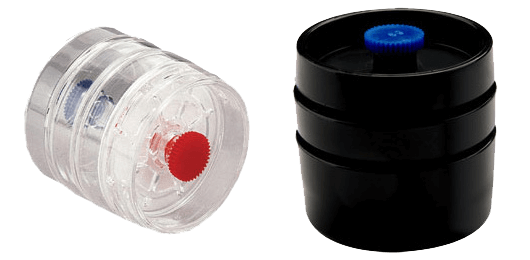
- Air Cassettes, Product IDs 8715309 and 8715251
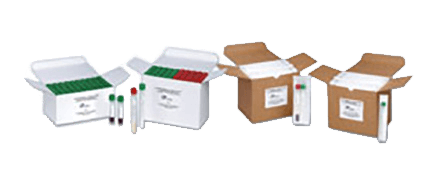
- Swab
- 1 ML Butterfields Swab, Product ID 8708935
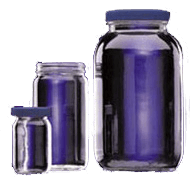
- Bulk
- 2 oz and 4 oz Glass Jars, Product IDs 8714223 and 8714232
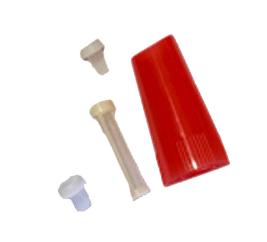
- Dust
- Dust and Allergen Sampler, Product ID 8715600
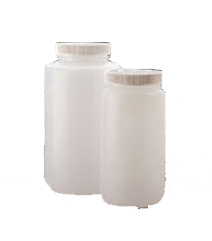
- Water
- 120 ml, 250 ml, and 1000 mL Sterile Plastic Bottles with Preservative, Product IDs 87M007, 87M005, and 87M001
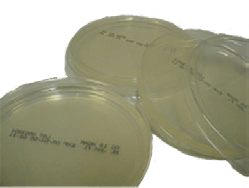
- Culture
- Bacterial and fungal axenic cultures on agar plates
Mold/Fungal Testing Panels qPCR
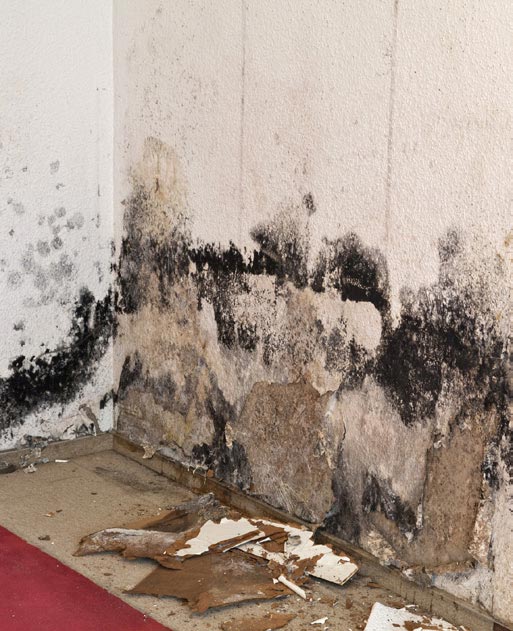
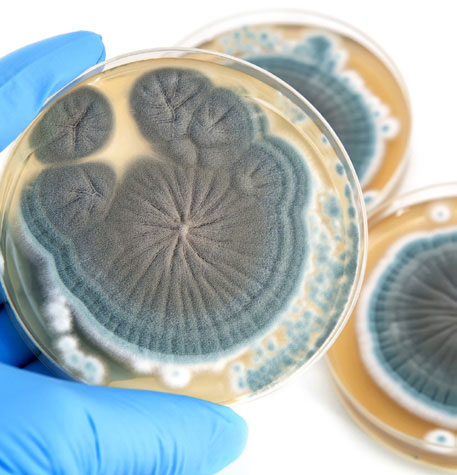
EMSL’s DNA Laboratory offers a wide variety of qPCR mold/fungal panel tests. All mold/fungal qPCR tests are accredited by the American Industrial Hygiene Association (AIHA).
M180 Environmental Relative Moldiness Index (ERMI) 36 Panel/M233 EPA-36 qPCR Panel
ERMI qPCR analysis is performed under a Patent License Agreement with the US Environmental Protection Agency (EPA) National Exposure and Research Laboratory
Group I (Water Damage Indicators): Aspergillus flavus, Aspergillus fumigatus, Aspergillus niger, Aspergillus ochraceus, Aspergillus penicillioides, Aspergillus restrictus, Aspergillus sclerotiorum, Aspergillus sydowii, Aspergillus unguis, Aspergillus versicolor, Aureobasidium pullulans, Chaetomium globosum, Cladosporium sphaerospermum, Eurotium (A) amstelodami, Paecilomyces variotii, Penicillium brevicompactum, Penicillium corylophilum, Penicillium crustosum, Penicillium purpurogenum, Penicillium spinulosum, Penicillium variabile, Scopulariopsis brevicaulis, Scopulariopsis chartarum, Stachybotrys chartarum, Trichoderma viride, Wallemia sebi.
Group II (Ubiquitous Fungi): Acremonium strictum, Alternaria alternata, Aspergillus ustus, Cladosporium cladosporioides v1, Cladosporium cladosporioides v2, Cladosporium herbarum, Epicoccum nigrum, Mucor & Rhizopus group, Penicillium chrysogenum, Rhizopus stolonifer
M181 Water Damage 20 qPCR Panel
Aspergillus flavus, Aspergillus fumigatus, Aspergillus niger, Aspergillus ochraceus, Aspergillus penicillioides, Aspergillus sclerotiorum, Aspergillus sydowii, Aspergillus unguis, Aspergillus versicolor, Aureobasidium pullulans, Chaetomiumglobosum, Cladosporium sphaerosperum, Eurotium (A) amstelodami, Paecilomyces variotii, Pencillium brevicompactum, Penicilliumcorylophilum, Penicillium crustosum, Penicillium spinulosum, Penicillium variabile, Stachybotrys chartarum
M182 Water Damage 15 qPCR Panel
Aspergillus flavus, Aspergillus fumigatus, Aspergillus niger, Aspergillus sydowii, Aspergillus versicolor, Aureobasidium pullulans, Aureobasidium pullulans, Chaetomium globosum, Cladosporium sphaerospermum, Eurotium (A) amstelodami, Paecilomyces variotii, Penicillium brevicompactum, Penicillium corylophilum, Penicillium spinulosum, Penicillium variabile, Stachybotrys chartarum
M184 Water Damage 10 qPCR Panel
Aspergillus/Penicillium Group, Aspergillus fumigatus, Aspergillus versicolor, Aureobasidium pullulans, Chaetomium globosum, Cladosporium sphaerospermum, Paecilomyces variotii, Stachybotrys chartarum, Scopulariopsis brevicaulis, Trichoderma viride
M186 Aspergillus Comprehensive 15 qPCR Panel
Eurotium (A.) amstelodami, Aspergillus flavus, Aspergillus fumigatus, Emericella (A.) nidulans, Aspergillus niger, Aspergillus ochraceus, Aspergillus parasiticus, Aspergillus penicillioides, Aspergillus restrictus, Aspergillus sclerotiorum, Aspergillus sydowii, Aspergillus terreus, Aspergillus unguis, Aspergillus ustus, Aspergillus versicolor
M187 Aspergillus Common 10 qPCR Panel
Eurotium (A.) amstelodami, Aspergillus flavus, Aspergillus fumigatus, Emericella (A.) nidulans, Aspergillus niger, Aspergillus ochraceus, Aspergillus parasiticus, Aspergillus sydowii, Aspergillus ustus, Aspergillus versicolor
M188 Aspergillus Nosocomial 6 qPCR Panel
Aspergillus flavus, Aspergillus fumigatus, Emericella (A.) nidulans, Aspergillus niger, Aspergillus terreus, Aspergillus versicolor
M189 Penicillium Comprehensive 13 qPCR Panel
Penicillium aurantiogriseum, Penicillium brevicompactum, Penicillium chrysogenum, Penicillium citrinum, Penicillium corylophilum, Penicillium crustosum, Penicillium expansum, Penicillium fellutanum, Penicillium purpurogenum, Penicillium roquefortii, Penicillium simplicissimum, Penicillium spinulosum, Penicillium variabile
M190 Penicillium Comprehensive Mycotoxin 9 Panel
Penicillium aurantiogriseum, Penicillium brevicompactum, Penicillium chrysogenum, Penicillium citrinum, Penicillium crustosum, Penicillium expansum, Penicillium roquefortii, Penicillium simplicissimum, Penicillium variabile
M284 Common Mycotoxin-Producing Fungi qPCR Panel
Aspergillus flavus, Aspergillus fumigatus, Aspergillus niger, Aspergillus ochraceus, Aspergillus penicilliodes, Aspergillus versicolor, Chaetomium globosum, Penicillium brevicompactum, Stachybotrys chartarum, Wallemia sebi
M100 Custom qPCR Fungal qPCR Panel
Combination of fungal species from other qPCR panels in any number
Rare Fungal Species (can be added to any qPCR panel)
Aspergillus parasiticus, Aspergillus terreus, Emericella (Aspergillus) nidulans, Penicillium aurantiogriseum, Penicillium citrinum, Penicillium expansum, Penicillium fellutanum, Penicillium roquefortii, Penicillium simplicissimum

Legionella qPCR Testing
Legionella pneumophila is an environmental bacterium and a causative agent of Legionnaires’ disease, a form of severe pneumonia. Legionella is commonly found in aquatic environments such as cooling towers, potable water distribution systems, fountains, and whirlpool spas. qPCR testing for Legionella has certain advantages compared with conventional culture techniques. It’s faster, more sensitive and allows detection of un-culturable and nonviable Legionella. EMSL DNA Lab participates in the CDC Environmental Legionella Isolation Techniques Evaluation (ELITE) Program. qPCR panel for Legionella spp., L. pneumophila, and L. pneumophila Sg 1 is accredited by the American Industrial Hygiene Association (AIHA).
M162 Legionella pneumophila, Legionella maceachernii, Legionella micdadei, Legionellasainthelensi/cincinnatiensis, qPCR Panel
Legionella pneumophila, Legionella micdadei, Legionella sainthelensi/ cincinnatiensis, Legionella maceachernii qualitative testing by qPCR
M164 Legionella spp., Legionella pneumophila, and Legionella pneumophila Serogroup 1 qPCR Panel
Legionella spp., Legionella pneumophila, and Legionella pneumophila Serogroup 1 quantitative testing by qPCR
M101 Legionella maceachernii qPCR
Legionella maceachernii qualitative testing by qPCR
M102 Legionella micdadeiq PCR
Legionella micdadei qualitative testing by qPCR
M103 Legionella pneumophila qPCR
Legionella pneumophila qualitative testing by qPCR
M104 Legionella sainthelensi/cincinnatiensis qPCR
Legionella sainthelensi/cincinnatiensis qualitative testing by qPCR
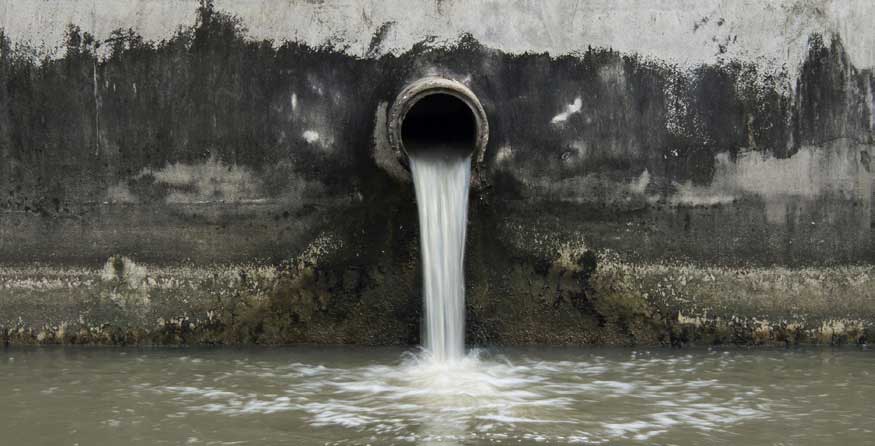
Fecal and Urine Contamination Testing by qPCR
Traditional water quality assessment based on culture of fecal indicator bacteria, such as Escherichia coli and Enterococcus spp., lacks both sensitivity and specificity. Molecular testing for Bacteroides spp. is not only more sensitive than culture, but also capable of identifying sources of fecal pollution, which is important for assessing the public health risk and devising management strategies. Plus to sewer contamination detection by Bacteroides spp., human polyomavirus biomarker testing offers an additional option for tracing a presence of human urine in the environment. qPCR tests for Total Bacteroides and Human Bacteroides are accredited by the American Industrial Hygiene Association (AIHA).
M095 Total Bacteroides qPCR
Total Bacteroides spp. quantitative testing by qPCR
M199 Human Bacteroides qPCR
Human Bacteroides spp. quantitative testing by qPCR
M333 Human polyomavirus qPCR
Human polyomavirus quantitative testing by qPCR
Pathogen Detection by qPCR
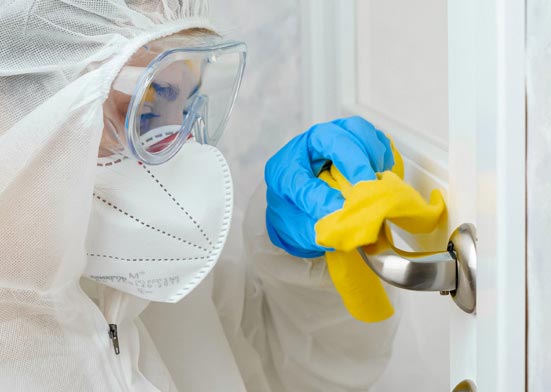
DNA Lab offers a wide range of molecular tests targeting a variety of viral, bacterial, fungal, and protozoan pathogens in the environmental samples. Many of these species are associated with food spoilage, hospital-acquired infections, tick-borne diseases, and zoonotic infections. The list of tests and corresponding test codes can be found at the beginning of the Guide.
Biodegrading Bacteria Testing by qPCR
Certain groups of microorganisms possess catabolic activities against polycyclic aromatic hydrocarbons and chlorinated hydrocarbons polluting environment. Testing for corresponding biomarkers of those activities is important for evaluation of the biodegradation potential of environmental microflora. The list of tests targeting bacteria and genes involved into biodegradation of aromatic hydrocarbons and chlorinated hydrocarbons and corresponding test codes can be found at the beginning of the Guide.
Sanger Sequencing and Whole Genome Sequencing
Plus to PCR, qPCR, and RT-qPCR tests DNA Lab possesses dideoxy sequencing and whole genome sequencing (WGS) capabilities. These methods can be used for high resolution analysis of the genetic code which makes possible identification of bacterial and fungal species. Greater WGS power allows subtyping and bacterial strain identification for microbial source tracking purposes and outbreak investigations.
Taxonomic Identification of Bacteria and Fungi
M192 Bacterial ID by dideoxy sequencing of 16S rRNA
M192 Fungal ID by dideoxy sequencing of ITS
Whole Genome Sequencing
M285 Whole Genome Sequencing of bacterial species
Special Projects
As a contract laboratory DNA Lab performs a variety of special projects involving different molecular biology approaches and techniques.
- Custom PCR, qPCR, and RT-qPCR test development
- Custom Sanger DNA sequencing
We can do much more,
Please contact us and let us help you.
dnalab2@emsl.com
800-220-3765
DNA Laboratory Pricing Guide
| Test | Code | 3 Hr | 6 Hr | 1 Day | 2 Day | 3 Day | 1 Wk | |
|---|---|---|---|---|---|---|---|---|
| PCR - Environmental Relative Moldiness Index (ERMI) 36 Panel | M180 | $1,278 | $957 | $603 | $403 | $316 | $242 | |
| PCR - Environmental Relative Moldiness Index (EPA) 36 Panel | M233 | $1,278 | $957 | $603 | $403 | $316 | $242 | |
| PCR - Water Damage 20 Panel | M181 | $1,051 | $791 | $498 | $322 | $242 | ||
| PCR - Water Damage 15 Panel | M182 | $888 | $666 | $425 | $291 | $202 | ||
| PCR - Water Damage 10 Panel | M184 | $623 | $535 | $262 | $202 | $161 | ||
| Create Your Own Fungal Panel (Price per species) | M100 | Call | Call | Call | ||||
| PCR - Aspergillus Comprehensive 15 Panel | M186 | $888 | $666 | $425 | $291 | $202 | ||
| PCR - Aspergillus Common 10 Panel | M187 | $711 | $535 | $262 | $202 | $161 | ||
| PCR - Aspergillus Nosocomial 6 Panel | M188 | $498 | $375 | $237 | $187 | $145 | ||
| PCR - Penicillium Comprehensive 13 Panel | M189 | $711 | $535 | $338 | $252 | $171 | ||
| PCR - Penicillium Comprehensive Mycotoxin 9 Panel | M190 | $623 | $498 | $254 | $195 | $153 | ||
| PCR - Mycotoxin 10 Panel | M284 | $711 | $380 | $295 | $250 | $161 | ||
| PCR/DNA - Rapid Pathogen Detection - Bacteria | ||||||||
| Borrelia burgdorferi lyme disease by qPCR | M196 | Call | Call | $254 | $161 | $136 | $102 | |
| Clostridium botulinum PCR | M206 | $888 | $711 | $425 | $291 | $242 | 212 | |
| E. coli 0157:H7 qPCR | M140 | $888 | $711 | $425 | $291 | $242 | 195 | |
| Helicobacter pylori qPCR | M207 | $888 | $711 | $425 | $291 | $242 | 212 | |
| Mycobacterium avium complex (MAC) qPCR; includes M. avium and M. intracellulare | M144 | $936 | $754 | $449 | $304 | $257 | $223 | |
| Mycobacterium tuberculosis by real-time PCR | M159 | $888 | $711 | $425 | $291 | $242 | $212 | |
| Salmonella spp., qPCR | M141 | $888 | $711 | $425 | $291 | $242 | $223 | |
| Shigella spp., qPCR | M287 | $888 | $711 | $425 | $291 | $242 | $223 | |
| Anaplasma phagocytophilum qPCR | M261 | Call | Call | $254 | $161 | $136 | $102 | |
| Leptospira qPCR | M262 | $765 | $595 | $205 | $163 | $131 | $117 | |
| Chlamydophila psittaci qPCR | M234 | $888 | $711 | $425 | $291 | $242 | $212 | |
| Clostridium difficile plus Toxin A & Toxin B qPCR | M279 | $888 | $711 | $425 | $291 | $242 | $223 | |
| PCR/DNA - Rapid Pathogen Detection - Fungi | ||||||||
| Candida auris qPCR | M286 | $711 | $425 | $291 | $242 | |||
| Histoplasma capsulatum NIOSH Nested PCR | M208 | $888 | $711 | $425 | $291 | $242 | ||
| Cryptococcus neoformans qPCR | M143 | $888 | $711 | $425 | $291 | $242 | ||
| Test | Code | Same Day | 1 Day | 2 Day | 3 Day | 4 Day | 1 Wk | 2 Wk |
| PCR/DNA - Rapid Pathogen Detection - Viruses | ||||||||
| COVID-19 (SARS-CoV-2) by qPCR (Swab/Air) | M330 | $845 | $397 | $343 | $276 | $236 | $222 | |
| COVID-19 (SARS-CoV-2) by qPCR (Waste Water) | M330 | $873 | $603 | $403 | ||||
| Test | Code | 3 Hr | 6 Hr | 1 Day | 2 Day | 3 Day | 1 Wk | |
| PCR/DNA - Rapid Pathogen Detection - Protozoan and Parasites | ||||||||
| Acanthamoeba spp., qPCR | M147 | $888 | $711 | $425 | $291 | $242 | ||
| Baylisascaris procyonis, raccoon roundworms | M236 | $888 | $711 | $425 | $291 | $242 | ||
| Giardia spp., qPCR | M149 | $888 | $711 | $425 | $291 | $242 | ||
| Babesia microti qPCR | M260 | Call | Call | $254 | $161 | $136 | $102 | |
| Naegleria fowleri by nested PCR | M197 | $888 | $711 | $425 | $291 | $242 | ||
| PCR/DNA Rapid Pathogen Detection - Insect | ||||||||
| Bed Bug (Cimex lectularius) qPCR | M146 | Call | $354 | $254 | $161 | $136 | $106 | |
| PCR/DNA - Rapid Pathogen Detection - PCR - DNA Sequencing (Price is per isolate) PCR - Legionella | M192 | $299 | ||||||
| Legionella pneumophila, Legionella micdadei, Legionella sainthelensi/cincinnatiensis, Legionella maceachernii | M162 | $799 | $623 | $313 | $252 | $202 | ||
| Legionella pneumophila | M103 | $799 | $623 | $213 | $171 | $136 | ||
| L. micdadei | M102 | $799 | $623 | $213 | $171 | $136 | ||
| L. sainthelensi/cincinnatiensis | M104 | $799 | $623 | $213 | $171 | $136 | ||
| L. maceachernii | M101 | $799 | $623 | $213 | $171 | $136 | ||
| Legionella spp. and L. pneumophila sero 1 qPCR | M164 | $799 | $623 | $313 | $252 | $202 | ||
| PCR - Fecal Contamination Indicators | ||||||||
| Bacteroides sp. (100 mL sample required) | M095 | $535 | $446 | $196 | $136 | $106 | ||
| Human Bacteroides spp., qPCR (100 mL sample required) | M199 | $535 | $446 | $196 | $136 | $106 | ||
| Rodent Dropping by PCR | M271 | $711 | $425 | $291 | $242 | |||
| Test | Code | 6 Hr | 1 Day | 2 Day | 3 Day | 4 Day | 1 Wk | |
| PCR/DNA - Aromatic Hydrocarbon Biodegradation Markers | ||||||||
| Ring Hydroxylating Monooxygenase qPCR | M264 | $647 | $385 | $263 | $221 | $184 | $147 | |
| Toluene Monooxygenase qPCR | M265 | $647 | $385 | $263 | $221 | $184 | $147 | |
| Phenol Monooxygenase qPCR | M266 | $647 | $385 | $263 | $221 | $184 | $147 | |
| Naphthalene Dioxygenase qPCR | M268 | $647 | $385 | $263 | $221 | $184 | $147 | |
| PCR/DNA - Chlorinated Hydrocarbon Biodegradation Marers in Dehalococcoides | ||||||||
| Dehalococcoides bvcA gene qPCR | M273 | $647 | $385 | $263 | $221 | $184 | $147 | |
| Dehalococcoides bvcA gene qPCR | M274 | $647 | $385 | $263 | $221 | $184 | $147 | |
| Dehalococcoides vcr gene qPCR | M275 | $647 | $385 | $263 | $221 | $184 | $147 | |
| Dehalococcoides tce gene qPCR | M276 | $647 | $385 | $263 | $221 | $184 | $147 |
DNA Laboratory Sampling Guide
Air Sampling
(Air Cassettes are available from EMSL, Product IDs 8715309 and 8715251)
- Obtain PCR air sampling cassette from EMSL.
- Remove the upper (blue) and lower (red) plugs of the cassette.
- Attach a vacuum pump to the cassette through the lower opening.
- Set pump flow rate for 10 liters per minute – 13 liters per minute.
- Sample as much air as desired through the upper opening. There is no upper limit to sampling time, however collecting 1000 liters of air is adequate for most of PCR tests.
- Place each air cassette into the individual air-tight container such as a ziploc plastic bag.
- Clearly label the plastic bag with sample identification.
- Fill the EMSL Chain of Custody specifying sample number, collected air volume, collection location, time and date.
- Ship cassette to EMSL.
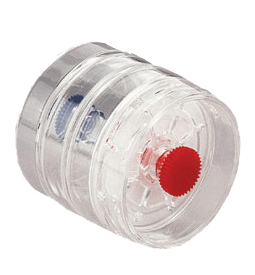
Mold / PCR Analysis Cassette
Product ID: 8715309
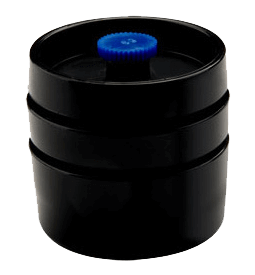
Mold / PCR Analysis Cassette
Product ID: 8715309
Bulk Sampling
(2 oz and 4 oz Glass Jars are available from EMSL, Product IDs 8714223 and 8714232)
- Obtain plastic bags or glass jars from EMSL.
- Locate the representative portion of bulk material.
- Collect small amount of material with spoon, spatula, or any other tool.
- Place the sample in a clean, air-tight container such as ziploc plastic bag or small glass jar. Seal tightly.
- Clean up any residual material on the outside of the container. If necessary disinfect with alcohol wipes.
- Clearly label the container with sample identification.
- Fill the EMSL Chain of Custody specifying sample number, collection location, time and date.
- Ship bulk sample to EMSL.
2 oz Glass Jar - Non Sterile
Product ID: 8714223
4 oz glass jar-non sterile
Product ID: 8714232
Swab Sampling
(1 ML Butterfields Swab is available from EMSL, Product ID 8708935)
- Obtain a swab from EMSL to collect specimen.
- Wearing gloves, remove the swab from transport tube.
- Swab the desired area thoroughly, rolling the swab lightly back and forth over sampling area. Sampling area of 4” x 4” is adequate for most of PCR tests.
- Insert swab into the tube with transport medium and firmly close the cap.
- Clearly label the transport tube with sample identification.
- Fill the EMSL Chain of Custody specifying sample number, sampling area, collection location, time, and date.
- Ship swab to EMSL.
1 ML Butterfields Swab
Product ID: 8708935
Dust Sampling
(Dust and Allergen Sampler is available from EMSL, Product ID 8715600)
- Obtain Dust and Allergen Sampler from EMSL.
- Remove white plastic caps from both ends of the Dust and Allergen Sampler.
- Attach Dust and Allergen Sampler to the vacuum cleaner hose or tube.
- Turn on the vacuum cleaner and vacuum area necessary to obtain enough material for PCR testing. There is no upper limit to sampling time, however collecting at least 5 mg of dust is required for most of PCR tests.
- Disconnect Dust and Allergen Sampler from the vacuum cleaner hose or tube.
- Attach white plastic caps to both ends of the Dust and Allergen Sampler to secure dust sample inside the inner mesh plastic tube.
- Insert each Dust and Allergen Sampler into the individual air-tight container such as a ziploc plastic bag.
- Clearly label the plastic bag with sample identification.
- Fill the EMSL Chain of Custody specifying sample number, collection location, time and date.
- Ship Dust and Allergen Sampler to EMSL.
Allergen Sampler
Product ID: 8715600
Water Sampling
(120 mL, 250 mL, and 1000 mL Sterile Plastic Bottles with Preservative are available from EMSL, Product IDs 87M007, 87M005, and 87M001)
- Obtain Sterile Plastic Bottles with Preservative from EMSL.
- Fill container with specified volume of water and seal securely to prevent leakage during transport. Collecting between 100 milliliters and 1 liter of water is adequate for most of PCR tests.
- Clean up any residual liquid on the outside of the container. Disinfect with alcohol wipes if necessary.
- Clearly label Plastic Bottle with sample identification.
- Fill the EMSL Chain of Custody specifying sample number, water volume, collection location, time and date.
- Pack Bottles to the insulated container with ice packs to avoid sample overheating during shipping.
- Ship water samples to EMSL with overnight delivery.
120 ML Ster Bottle w /preserve for Microbiology
Product ID: 87M007
250 mL Ster Bottle w/ Preserv for Non Potbl Water/Legionella
Product ID: 87M005
1000 mL Ster Bottle w/ Preserv for Potable Water / Legionella
Product ID: 87M001
Bacterial and Fungal Culture Sampling
- Bacterial and fungal strains can be submitted for identification as axenic cultures on agar plates.
- Isolated colonies must be visible on a plate to ensure culture purity and accuracy of the identification.
- Clearly label agar plate with sample identification.
- Fill the EMSL Chain of Custody specifying sample number.
- Pack agar plate to the insulated container ensuring sample integrity during shipping.
- Ship agar plate to EMSL.


 English
 French
 Spanish
 Portuguese