


Radiochemistry - Uranium Testing
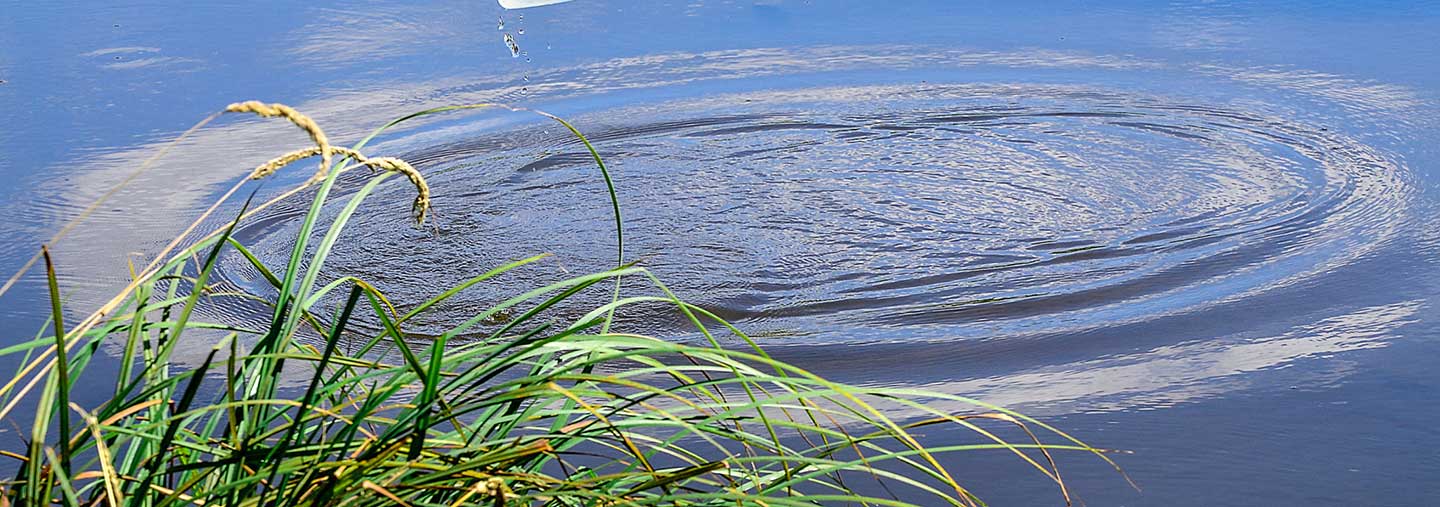
Uranium (U) is a radioactive metal present in low amounts in rock, soil, water, plants, and animals. Uranium and its decay products contribute to low levels of natural background radiation in the environment. Significant concentrations of uranium occur naturally in some substances, such as phosphate deposits and uranium-enriched ores. Over time, uranium decays and releases uranium-234, radium-226, and radon-222 into the soil, water, and air. The half-lives of uranium isotopes are quite long: Uranium-238 is 4.5 billion years, Uranium-235 is 710 million years, and Uranium-234 is 250,000 years. Radium-226 also has a lengthy half-life at 1,600 years, whereas radon-222 is a very short 3.8 days.
Although uranium is most commonly thought of as something only in nuclear weapons or power plants, in actuality, uranium is naturally occurring and quite abundant. By analyzing for its presence, it can help determine if you have possible contamination of your water. Over time, the health effects from exposure to uranium and its by-products can potentially lead to cancer and is particularly dangerous to your kidneys1.
EPA 200.8 vs. EPA 908.0: What Is The Difference?
The difference between these two methods is how they measure the level of uranium:
- EPA 200.8 measures the level of uranium by mass (µg/L) with an inductively coupled plasma mass spectrometry (ICP-MS).
- EPA 908.0 measures the level of uranium by the activity level (pCi/L) utilizing an alpha-beta counter.
To convert the results, you either multiply or divide the result by a conversion factor of 0.67.
µg/L*0.67=pCi/L OR (pCi/L)/0.67=µg/L
The analysis is reported in a standard unit of picocuries per liter (pCi/L) or micrograms per liter (µg/L).
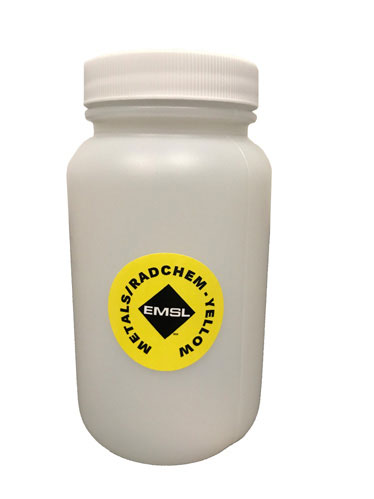
Water Sampling Container
Sampling Bottle: 500 mL
EMSL Product ID: 8714205
Preservative: 5 mL of nitric acid
Shipping Requirements: No ice needed
Hold-Time: 6 months from collection
Uranium Method EPA 200.8 Detection Limit: 1 µg/L
Uranium Method EPA 908 Detection Limit: 0.67 pCi/L
Radiological Testing Guidelines
| Gross Alpha/Beta Results | Potential Contamination | Recommended Additional Test(s) |
|---|---|---|
| < 5 pCi/L | Background Levels | None |
| 5-15 pCi/L | Possible Radium | Radium 226 and 228 |
| > 15 pCi/L | Possible Radium and Uranium | Radium 226, 228, and Uranium |
Treatment Recommended If: |
||
| Radium-226 + Radium-228 > 5 pCi/L OR Gross Alpha – Uranium > 15 pCi/L OR Uranium > 30 µg/L |
||
| Safe Water Drinking Act (SDWA) Standards3,4 | Maximum Contaminant Limit (MCL) |
|---|---|
| Uranium | 30 µg/L |
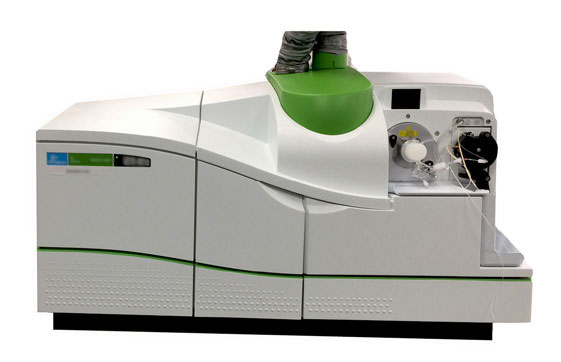
ICP-MS
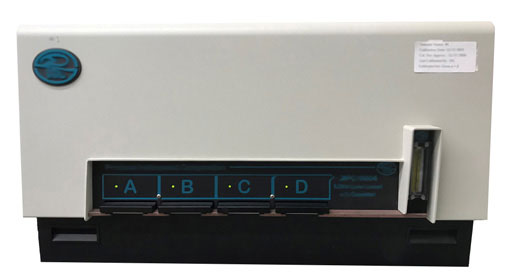
Alpha/Beta Counter
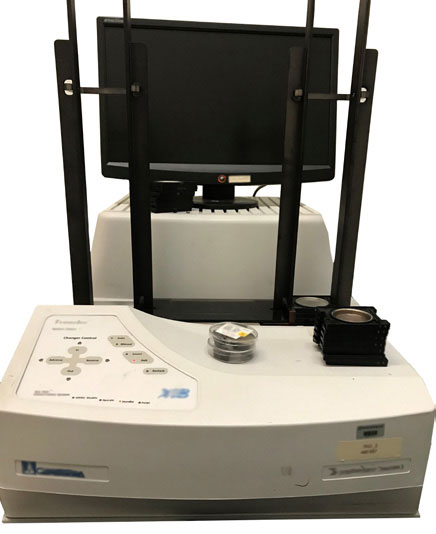
Alpha/Beta Counter
1 (Uranium) – https://semspub.epa.gov/work/HQ/175267.pdf
2 (Radionuclides) – https://www.epa.gov/dwreginfo/radionuclides-rule
3 (Radionuclides) – https://nepis.epa.gov/Exe/ZyPDF.cgi?Dockey=30006644.txt
CAUTION:
Sampling bottles contain nitric acid as a preservative which can easily burn your skin and clothes. Please use gloves when handling bottles, avoid overfilling the bottles, and splashing the contents on you.
What is an isotope?
Any of two or more species of atoms of a chemical element with the same atomic number and nearly identical chemical behavior but with differing atomic mass or mass number and different physical properties.
What is a half-life?
The time required for a radioactive substance to lose 50 percent of its radioactivity by decay is known as the half-life.
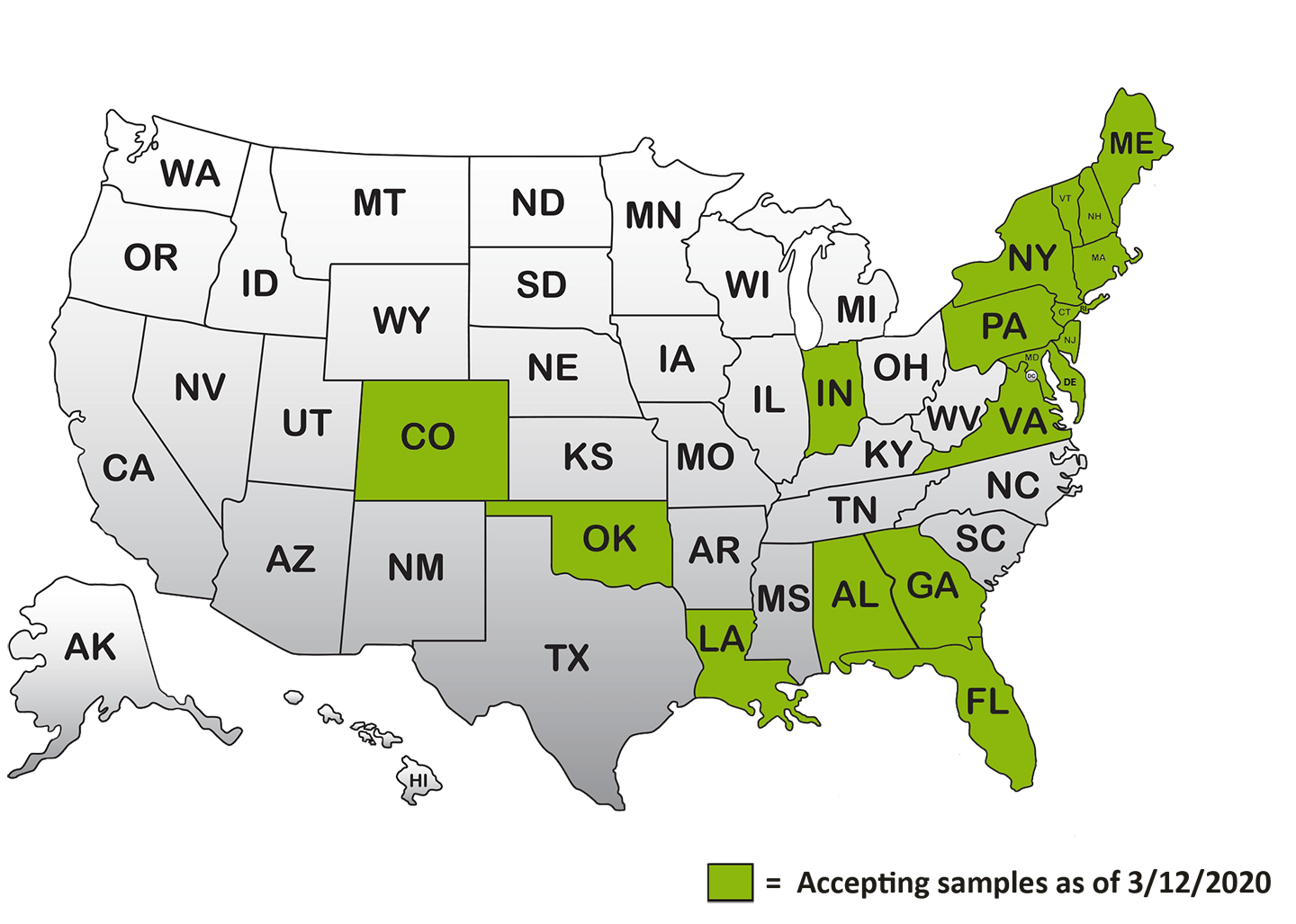
State of Origin
As of 03/12/2020, we can accept samples from:
| Alabama | Indiana | New York |
| Colorado | Louisiana | Oklahoma |
| Connecticut | Maine | Pennsylvania |
| Delaware | Maryland | Rhode Island |
| District of Columbia | Massachusetts | Vermont |
| Florida | New Hampshire | Virginia |
| Georgia | New Jersey |
As of 03/12/2020, we cannot accept samples from:
| Alaska | Minnesota | Oregon |
| Arizona | Missouri | South Carolina |
| Arkansas | Mississippi | South Dakota |
| California | Montana | Tennessee |
| Hawaii | Nebraska | Texas |
| Idaho | Nevada | Utah |
| Illinois | New Mexico | Washington |
| Iowa | North Carolina | West Virginia |
| Kansas | North Dakota | Wisconsin |
| Kentucky | Ohio | Wyoming |
| Michigan |


 English
 French
 Spanish
 Portuguese